Peugeot Partner Review
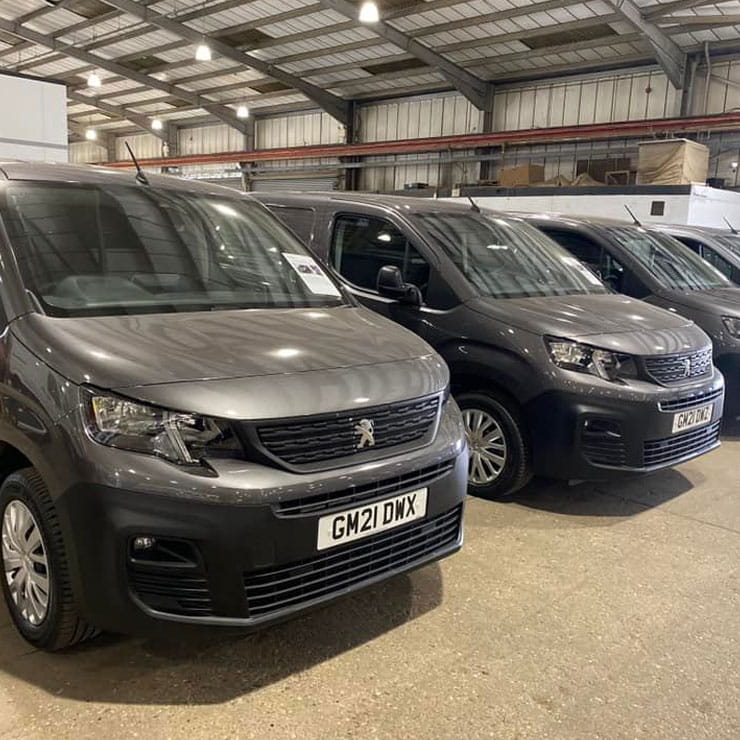
For many people, and people who know their light vans, the Peugeot Partner is essentially the same vehicle as the Citroen Berlingo and the Vauxhall Combo Cargo. They're built in the same factory in Spain and are broadly similar in most of their specifications, and even their aesthetics.
However, when different car and van manufacturers join together to design and produce similar vehicles in a productive joint venture like this one, more often than not, there's a dominant partner, and this case is no different.
So which van from the three mentioned above goes that extra mile? Well, in all seriousness, the Peugeot Partner is the one that stands out just a tiny bit more over the Berlingo and the Combo Cargo.
What makes the Partner the stand-out van?
But why is this? If all three of the aforementioned vans get the same engine options, with either a 1.2-litre petrol or 1.5-litre BlueHDi Euro 6 diesel engine, and each has a more-or-less identical front-end styling, what gives the Peugeot Partner the edge?
Well, although the Berlingo and the Combo Cargo share an interior, it's the Peugeot Partner that has its very own i-Cockpit, a flashy design adapted from Peugeot's passenger cars and one that sets the Partner apart from its cousins. Similar aesthetics? Tick. Engine type the same? Tick. More special features than the other two and an increased level of drivability? Tick.
First Generation of Partner
But where did it all start for the Peugeot Partner? Officially launched in July 1996, this stylish van remained largely unchanged until the year 2003 when it underwent a series of minor facelifts, including shuffling the interior around and some front-end ugrades.
As with so many other manufacturers around the same time, under increasing obligation to think of their effect on the planet, Peugeot (and Citroen) launched the Citroen Berlingo First Electrique and the Peugeot Partner Origin Electric in 2010.
These two electric vans were powered by the Monegasque firm Venturi, which assembled them in Solesmes, Sarthe.
The end of the road for the Peugeot Partner?
Curiously, in Argentina, Peugeot launched an off-road version of its Partner, called Partner Patagonica, presumably with grand ideas of cruising through the Argentinian mountainous terrain of Patagonia, showcasing the van's versatility and robustness.
This model had various names when it was sold across Europe in the 2000s, including Partner Ushuaia Grand Raid, Partner Escapade, Partner Grande Escapade, Partner VTC, Partner Indiana, as well as some others.
However, from 2013, this version of the Partner was discontinued in Europe, although the European continent too, boasts some fascinating terrain on which you could really test the Patagonica out!
Fortunately, this did not spell the end for the Peugeot Partner though, and a new model was launched in the UK as recently as 2019, with excellent reviews.
Although company, it's spacious, there's lots of storage space, they're efficient, easy to drive, reliable, robust, and the special features in the form of useful technology that other vans don't yet use will convince you that this van is one of the best on the roads in 2022.